
Sciatica Care & Ayurvedic Wellness Support
Sciatica refers to pain caused by irritation or compression of the sciatic nerve. It often travels from the lower back through the buttock and down one leg, sometimes with tingling, numbness or weakness.
Understanding the cause of your symptoms is important. Explore practical movement guidance, treatment options and complementary wellness considerations for people experiencing sciatica.
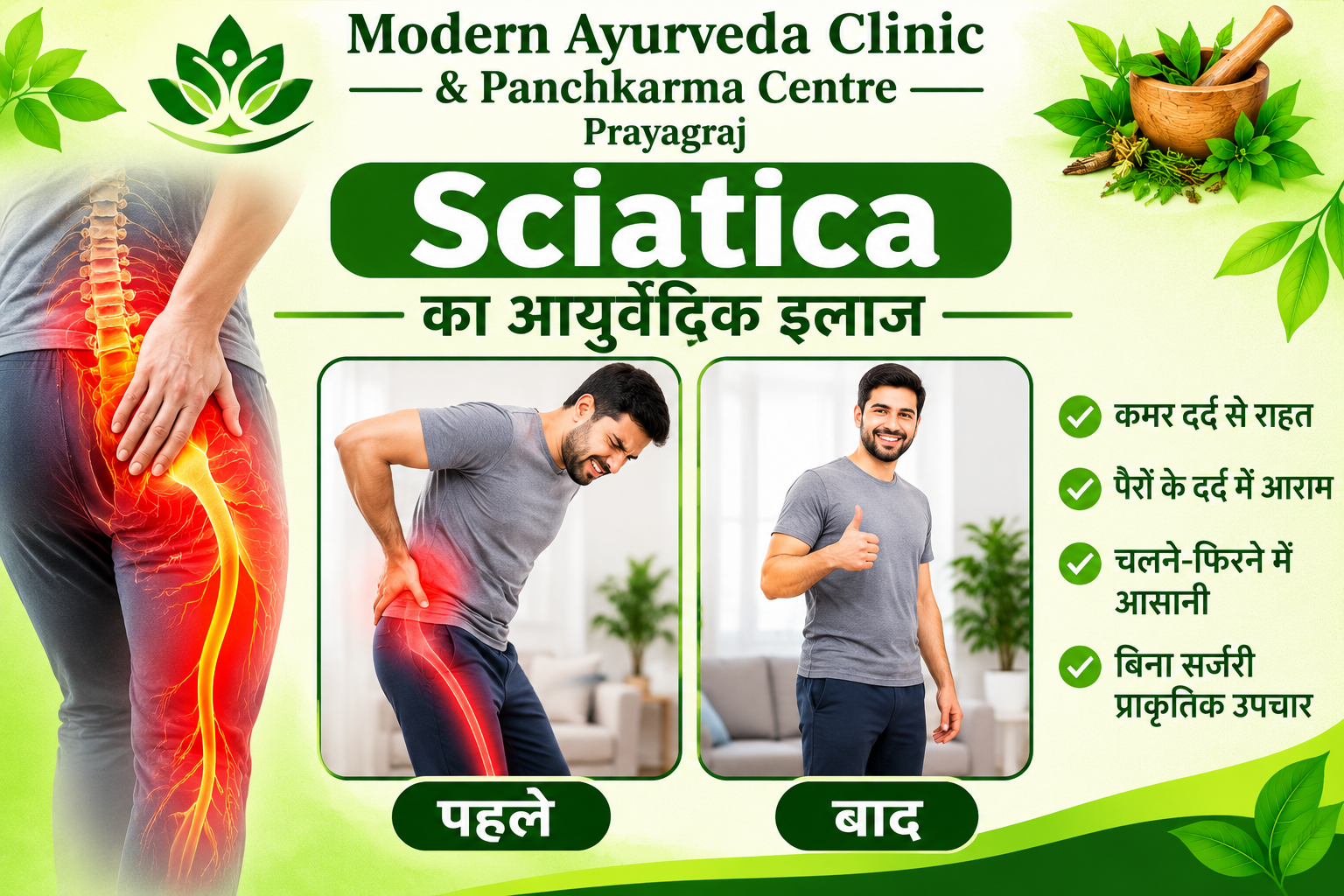
What Is Sciatica?
The sciatic nerve runs from the lower back through the hips and buttocks into each leg. When the nerve or its roots become irritated or compressed, pain and other symptoms may follow its pathway. A slipped or herniated disc is one possible cause, but not the only one.
Common Signs of Sciatica
- Pain travelling from the lower back or buttock into one leg
- Burning, shooting or electric-shock-like pain
- Tingling or pins-and-needles sensations in the leg or foot
- Numbness or altered sensation along the affected leg
- Symptoms that may worsen with certain movements, coughing or sneezing
Why Proper Assessment Matters
Back and leg pain can have several causes, including nerve-root irritation, muscle or joint problems and other conditions. Not all radiating leg pain is sciatica.
A healthcare professional can assess your symptoms, strength, sensation and medical history to decide whether further testing or treatment is needed.
Explore the Care ApproachWhat May Lead to Sciatic Nerve Pain?
Sciatica is a symptom pattern rather than a single disease. Identifying the underlying cause helps guide appropriate care.
Herniated Disc
A disc in the spine may press on or irritate a nerve root, causing pain that travels into the leg.
Spinal Stenosis
Narrowing of spaces in the spine can put pressure on nerves and may cause pain, numbness or weakness.
Age-Related Changes
Changes in spinal discs and joints may contribute to nerve irritation in some people.
Movement and Posture
Some positions or activities may aggravate symptoms, although posture alone does not explain every case.
Muscle-Related Pain
Muscles around the hip and buttock can contribute to pain that resembles sciatica and may need a different assessment.
Other Conditions
Less common spinal or non-spinal conditions can cause similar symptoms. Persistent or unusual pain should be assessed.

Choose movement and exercises according to your symptoms and professional guidance.
Daily Habits That May Support Recovery
Many people with sciatica improve over time, but the right approach depends on the cause and severity. Gentle activity is often preferable to prolonged bed rest when it is safe to move.
- Keep moving gently: Short walks or comfortable daily activity may help if tolerated.
- Change positions regularly: Avoid staying in one sitting or standing position for long periods.
- Use suitable exercises: A physiotherapist can guide you on movements appropriate for your symptoms.
- Lift carefully: Avoid heavy lifting or twisting that worsens your pain.
- Support recovery: Prioritise sleep and a balanced daily routine.
- Review ongoing symptoms: Seek reassessment if pain persists, worsens or limits daily activities.
Steps Towards Managing Sciatica
Treatment depends on the cause, the severity of symptoms and whether there are signs of nerve damage or another condition.
Assess the Cause
A clinician may review pain distribution, sensation, muscle strength and movement. Imaging is considered when clinically appropriate.
Consider Suitable Treatment
Depending on the diagnosis, treatment may include guided activity, physiotherapy, medication or specialist procedures. Some cases need urgent evaluation.
Discuss Complementary Wellness
Ayurveda-inspired practices should be reviewed for safety and suitability. Evidence for herbal remedies as a treatment for sciatica is limited; they should not delay medical care.
When Is Sciatica an Emergency?
Seek emergency medical care immediately if you develop new difficulty passing urine or loss of bladder or bowel control, numbness around the groin or saddle area, or severe or progressive weakness—particularly in both legs. These can be signs of serious nerve compression. Seek prompt medical assessment for new weakness, fever, major injury or rapidly worsening pain.
Common Questions About Sciatica
Understand the symptoms, treatment choices and when to seek help.
Can sciatica get better on its own?
Many episodes improve over several weeks, but recovery varies depending on the cause. Seek assessment if pain is severe, persistent or worsening, or if you develop numbness or weakness.
Is walking helpful for sciatica?
Gentle walking may be helpful for some people if tolerated. Start with a comfortable amount and avoid pushing through worsening leg pain. A clinician or physiotherapist can tailor advice to your needs.
Can Ayurveda cure sciatica?
There is no reliable evidence that Ayurveda permanently cures sciatica or removes nerve compression. Complementary practices may be discussed with your healthcare professional, but they should not replace appropriate assessment and evidence-based treatment.
Does sciatica always require an MRI?
No. Imaging is not routinely required for every case. A clinician may recommend it when symptoms are severe or persistent, when neurological signs are present, or when the result could change treatment.
Should I rest completely if my back and leg hurt?
Prolonged bed rest is generally not recommended for uncomplicated sciatica. Gentle activity may be appropriate, but the safest plan depends on your symptoms and the underlying cause.
Can sciatica cause tingling or numbness?
Yes. Irritation or compression of a nerve can cause tingling, numbness or weakness in parts of the leg or foot. New or progressive weakness, or numbness around the groin, requires urgent medical assessment.
Looking for Guidance on Sciatica and Lower Back Pain?
Discuss your symptoms, suitable treatment options and whether complementary wellness practices are appropriate for your condition.
Call to Enquire